Production
Crude Oil Production in Bakken Formation Shows No Sign of Slowing
Crude oil production from the Bakken formation is projected to continue rising dramatically over the next five years, though exactly how far and how fast will be determined by the region's
Released Friday, November 02, 2012
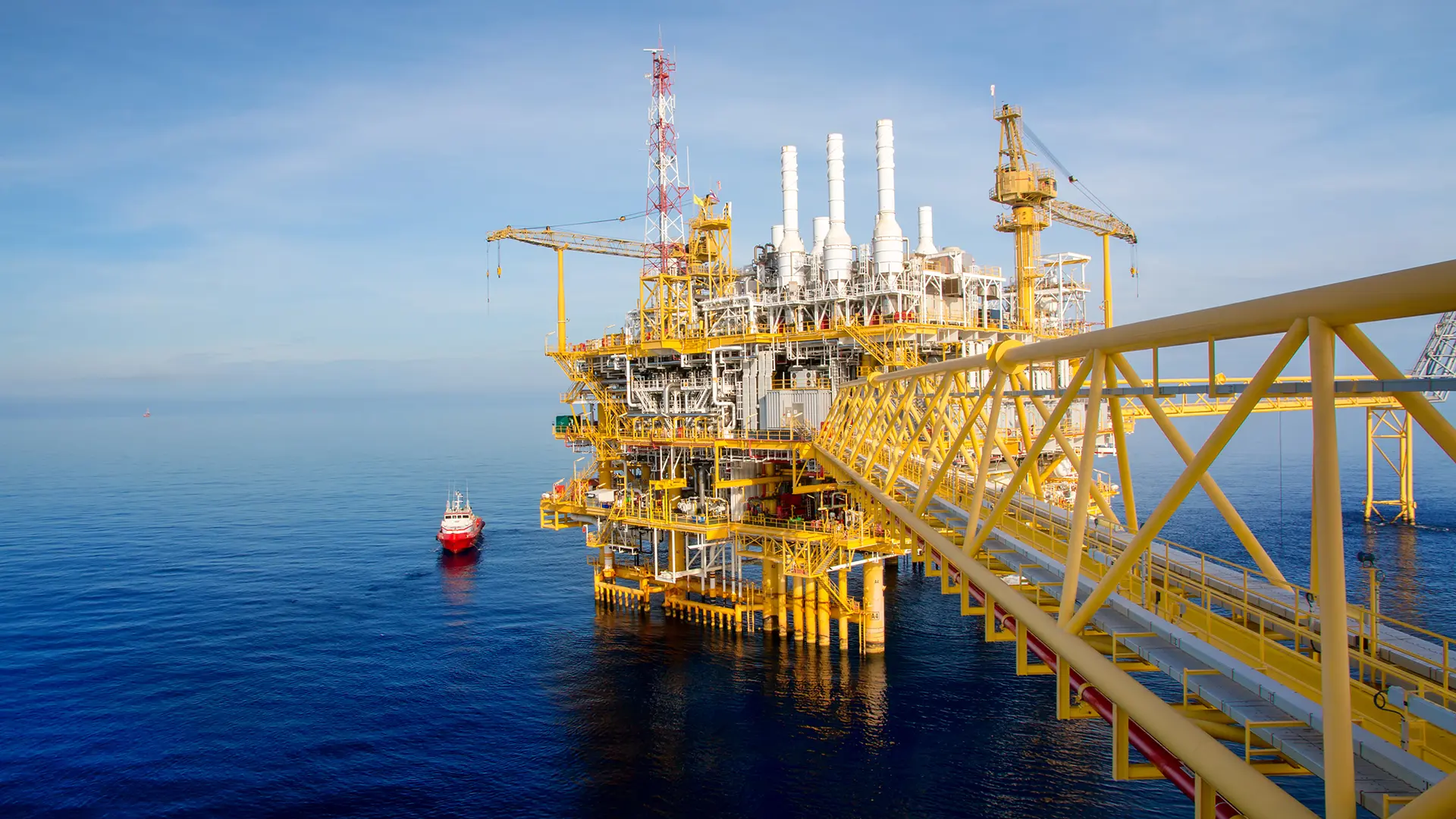
Written by John Egan for Industrial Info Resources (Sugar Land, Texas)--Crude oil production from the Bakken formation is projected to continue rising dramatically over the next five years, though exactly how far and how fast will be determined by the region's infrastructure and pipeline build-out, potential U.S. regulations, and global forces of supply and demand, speakers told an oil industry conference here last week.
Today, crude oil production in the Bakken formation, mostly in North Dakota, is about 750,000 barrels per day (BBL/d), a 25% increase over comparable year-earlier production levels of 600,000 BBL/d, said Jay Williams, an energy analyst at BENTEK Energy LLC (Evergreen, Colorado). He addressed about 300 attendees at the Bakken Infrastructure Finance & Development Summit, organized by Information Forecast Incorporated (Infocast) (Woodland Hills, California).
By 2016, crude oil production in the Bakken could double to about 1.5 million BBL/d, Williams projected. Farther out, in 2020, his firm forecast production rising to 2 million BBL/d. As recently as 2009, crude oil production from that formation was about 250,000 BBL/d, he added.
"The Bakken is benefitting from the realignment of producer investment criteria toward oil and natural gas liquid (NGL) plays," he told the Infocast conference. "Oil prices and oil infrastructure takeaway capacity are the primary drivers of the strong economics in the region."
U.S. crude oil prices have fallen about 15% since mid-September: West Texas Intermediate (WTI) currently fetches about $85 per barrel, down from about $100 per barrel in mid-September. But even at current prices, crude oil produced in the Bakken is highly profitable, Williams said; Bakken producers are generating internal rates of return (IRR) of about 60% at current prices. Back when WTI was $100 per barrel, Bakken producers were reaping a 75% IRR. Crude oil production in that formation is only slightly less profitable than production in the Permian Basin. Returns from those areas are higher than in other U.S. tight-oil formations, he said.
Rick Muncrief echoed the positive outlook of Williams and other conference speakers. Muncrief, senior vice president of operations and resource development for Continental Resources Incorporated (NYSE:CLR) (Enid, Oklahoma). A large producer in the Bakken, Continental's stock priced has reflected its large and growing operation in the Bakken, rising about 500% in three years. It hit a high of about $97 per share in early 2012, up from a low of about $16 per share in early 2009. Right now, the stock trades at about $72 per share.
"There's only one Bakken," Muncrief told attendees at the Infocast conference. That formation was "changing the world," he added.
In 2010, Continental adopted the ambitious goal of tripling its 2009 year-end production levels by 2014. The company sought to increase production from 37,300 barrels of oil equivalent per day to 112,000 barrels of oil equivalent per day. But strong demand and favorable reservoir economics will allow Continental to hit its year-end 2014 production target by mid-2013, Muncrief predicted. Reaching its initial goal would have required a 25% compound annual growth rate (CAGR), considered high for many businesses. But Continental has achieved a 37% CAGR due to operating efficiencies, among other factors, he said.
Continental now produces about 36 million barrels of oil per year from the Bakken formation, and it seeks to increase annual production to more than 108 million barrels per year by 2017, Muncrief told the Denver conference.
One factor driving strong demand for Bakken crude is its favorable properties--higher American Petroleum Institute (API) gravity and lower sulfur content than WTI, the U.S. benchmark crude. Bakken has "premium crude, it's the refiner's crude of choice," he said. "It has consistent quality and is the lowest in sulfur." Currently, refiners in New York, New Jersey, Louisiana, and Washington State process Continental's crude oil. As fast as the supply of Bakken crude oil was growing, Muncrief asked if the demand for it was growing even more rapidly, given its favorable properties.
A barrel of Bakken yields about 45% gasoline compared to gasoline yields of 30% to 35% for Louisiana Light & Sweet (LLS) or WTI, respectively, Muncrief said, noting that Bakken's premium quality crude oil is allowing refiners to substitute it for higher-priced crude from overseas or Alaska. Blending Bakken's crude with crudes that are heavier or higher in sulfur content allow refiners to meet sulfur-related regulations at a lower cost compared to equipment upgrades, he added.
Speakers at the Infocast conference were generally bullish on the future of Bakken crude oil production. But there was broad recognition that, while the future looked bright, there were several factors that stood in the way of realizing that potential. "It's a great time to be in the oil business in North Dakota," said one state economic development official. "But we don't have enough workers and we don't have enough housing."
One speaker at the conference, Michael Schaal, director of the Office of Petroleum, Natural Gas and Biofuels Analysis in the U.S. Energy Information Administration (EIA) (Washington, D.C.), agreed that access to labor was one factor that could keep Bakken crude-oil producers from realizing the full potential of the region. But labor was not the only potential limiting factor: He also noted that access to resources (i.e., regulation), infrastructure capacity, refinery capacity, and global demand for crude oil also are important factors that will shape the future of crude oil production from the Bakken.
Industrial Info Resources (IIR), with global headquarters in Sugar Land, Texas, and eight offices outside of North America, is the leading provider of global market intelligence specializing in the industrial process, heavy manufacturing and energy markets. Industrial Info's quality-assurance philosophy, the Living Forward Reporting Principle, provides up-to-the-minute intelligence on what's happening now, while constantly keeping track of future opportunities.
/news/article.jsp
false
Want More IIR News Intelligence?
Make us a Preferred Source on Google to see more of us when you search.
Add Us On GoogleAsk Us
Have a question for our staff?
Submit a question and one of our experts will be happy to assist you.

Forecasts & Analytical Solutions
Where global project and asset data meets advanced analytics for smarter market sizing and forecasting.
Explore Our SolutionsRelated Articles
-
August Wildfire Outlook Expands Risk Across U.S. Energy Regi...August 11, 2026
-
Helmerich & Payne Reaps Rewards from Drilling Demand in Perm...August 10, 2026
-
Colombia's Offshore Gas Might Ease Supply ChallengeAugust 10, 2026
-
McDermott Adds Mozambique Rovuma Project to LNG WorkAugust 10, 2026
-
NGL Demand Pushes Targa to Add Permian Pipelines, ProcessingAugust 07, 2026

PECWeb Global Market Intelligence Platform
Identify opportunities, anticipate change, and execute with confidence. PECWeb connects the industrial intelligence you need, from projects and assets to operational events, all in one platform.
Discover PecwebIndustry Intel
-
European Chemicals and Transport Fuels OutlookPodcast Episode / Jul 10, 2026
-
2026 European Petroleum Refining Project OutlookPodcast Episode / Jun 26, 2026
-
Brazil: Efficiency, Innovation, and Opportunities in the Food & Beverage IndustryPodcast Episode / Jun 12, 2026
-
2026-2027 Investment Radar for Mexico, Central America & the CaribbeanPodcast Episode / May 29, 2026
-
Innovations Shaping the Next Era of Power GenerationPodcast Episode / May 22, 2026